
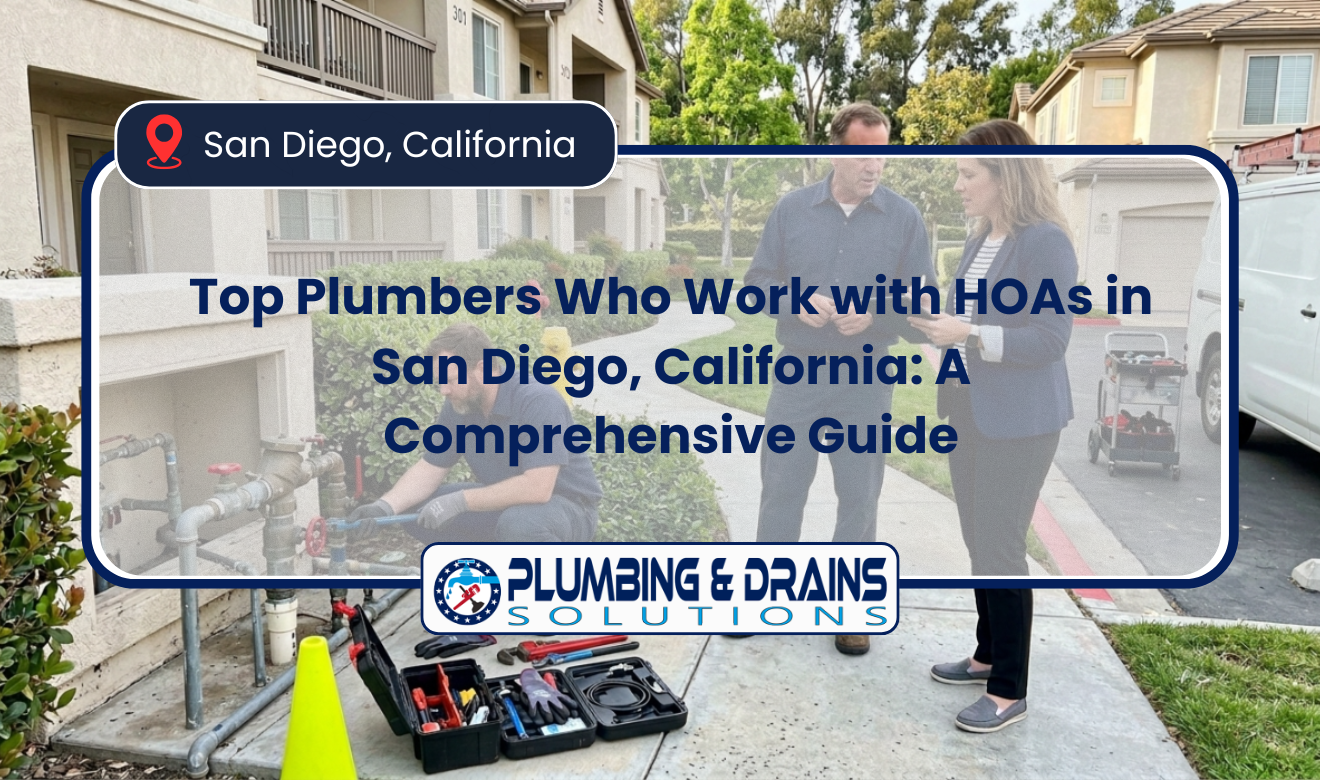
Executive Summary
Plumbers who work with HOAs in San Diego should be treated as multi-family infrastructure contractors: they must verify licensing/insurance, isolate shared systems with minimal disruption, and deliver code-compliant repairs backed by board-ready documentation. The most reliable vendors pair diagnostics (camera, pressure, leak evidence) with clear scopes, permitting readiness, and resident coordination to reduce repeat emergencies and disputes.
3 Core Insights
- Verify credentials and liability upfront: Require an active CA C-36 license, appropriate insurance/workers’ comp status, and the ability to pull permits and meet California Plumbing Code (Title 24) requirements.
- Prioritize system-level diagnostics and isolation planning: The best HOA plumbers can classify issues (branch vs. stack vs. main), use the right access points and tools (camera, pressure testing, leak detection), and plan unit/section/main shutoffs to limit outages.
- Demand board-ready scopes to prevent change orders and disputes: Proposals should include evidence, root cause, repair method, inclusions/exclusions, restoration boundaries, outage/access plans, and verification deliverables (photos, meter/pressure logs, camera stills).
Plumbers who work with HOAs in San Diego are licensed plumbing contractors experienced in servicing common-area systems, coordinating with property managers, and completing repairs that meet HOA rules and California code. These vendors typically handle multi-unit diagnostics like recurring slab-leak indicators in ground-floor units, mainline backups at shared cleanouts, and pressure imbalances caused by aging PRVs on building risers. They also understand how to isolate water with minimal disruption by using unit shutoffs, building sectional valves, and backflow assemblies at meter locations common in San Diego condo and townhome layouts. In coastal neighborhoods such as Mission Valley, Clairemont, and Pacific Beach, they often address accelerated corrosion on galvanized lines, pinhole leaks on copper, and failing anode rods in shared water-heater closets due to humidity and salt air. A qualified HOA plumber documents findings with photos, meter-read comparisons, and fixture counts, then provides scope language suitable for board packets, including after-hours response notes, parts lists, and recommended code-compliant upgrades like expansion tanks, seismic strapping, and pressure regulation. This guide breaks down how to identify the best HOA-ready plumbers in San Diego, what credentials to verify, and which service capabilities matter most for multi-family properties.
What HOA boards and property managers should expect from a San Diego multi-family plumber
HOA plumbing work is not “standard residential” because it combines life-safety, shared-asset protection, and resident coordination. The right contractor will be able to diagnose building-wide patterns, communicate in board-ready scope language, and complete repairs that comply with California Plumbing Code (Title 24) and local permitting rules.
In practice, that means the plumber should be comfortable working with:
- Common-area systems (building mains, risers, shared water-heater closets, irrigation tie-ins where applicable).
- Unit-to-common interfaces (angle stops, unit shutoffs, branch lines, pressure balancing, recirculation loops).
- Documentation standards used by HOAs: photo logs, meter reads, shutoff maps, fixture counts, and “not-to-exceed” approvals.
- Resident communication: notices for water shutoffs, access scheduling, and after-hours procedures.
Credentials to verify before approving a vendor
Vetting is the fastest way to prevent liability and failed inspections. HOA-ready plumbers should be able to provide licensing, insurance, and permit competency without delay.
Use the following checklist before any contract approval:
- California contractor license: Verify an active C-36 Plumbing Contractor license through the Contractors State License Board (CSLB).
- Insurance:
- General liability with limits appropriate to the property’s risk profile.
- Workers’ compensation (or a valid exemption if permitted under CSLB rules for the business structure).
- Permitting readiness: Ability to pull permits when required (for example, many water-heater replacements and repipes require permits and inspections under local jurisdiction rules).
- Code literacy: Familiarity with California Plumbing Code (Title 24) requirements related to pressure regulation, backflow prevention, seismic bracing, and water-heater safety controls.
- Backflow capability: If the association has testable backflow assemblies, confirm the contractor can coordinate annual testing and any required repairs to keep the device compliant.
Operational capabilities that matter in HOA environments
Multi-unit properties need plumbers who can isolate, diagnose, and restore service without triggering building-wide disruption. The best HOA vendors bring repeatable processes and the right tools for shared-system troubleshooting.
Look for these capabilities as minimum standards:
- Isolation planning: Ability to identify and operate unit shutoffs, sectional valves, and main valves; ability to plan shutoffs with minimal outage time.
- Diagnostic tooling: Video inspection, acoustic leak detection when appropriate, pressure testing, and clear documentation of findings.
- Drain and mainline performance: Capacity to clear and verify building drains and shared cleanouts, not just a single fixture line.
- Water-pressure management: Testing static and dynamic pressure, evaluating PRVs, and checking thermal expansion concerns.
- After-hours response: Defined emergency procedures for leaks, backups, or water-heater failures, with clear triage and escalation steps.
How HOA plumbers scope work for boards (and why it prevents disputes)
Board decisions require scopes that are precise, comparable, and inspection-ready. A high-quality scope distinguishes between common-area responsibility and in-unit responsibility, and it explains the method—not just the result.
A board-ready plumbing scope should include:
- Problem statement: Where it occurs, when it occurs, and what systems are affected (e.g., “ground-floor stack serving Units 101–104”).
- Evidence: Photos, video stills, meter-read comparisons, and pressure readings with time stamps.
- Root-cause analysis: For example: “recurring backup due to scale and grease accumulation downstream of shared cleanout,” or “pressure spikes linked to failing PRV and missing/undersized expansion control.”
- Method of repair: Access plan, protection plan (dust/water), restoration boundaries, and testing/verification steps.
- Compliance notes: Where a permit is anticipated, inspection steps, and any required upgrades (seismic strapping, venting corrections, backflow-related requirements).
- Operational plan: Shutoff duration estimate, unit access requirements, and after-hours contingencies.
Common HOA plumbing problems in San Diego condos and townhomes
San Diego’s housing stock and coastal conditions create repeatable failure patterns that skilled multi-family plumbers recognize quickly. Addressing these issues early reduces water damage claims and repeated service calls.
Problems that frequently show up in HOA-managed communities include:
- Mainline backups at shared cleanouts: Often linked to grease, wipes, root intrusion, offsets, or deteriorated pipe materials.
- Slab-leak indicators: Warm spots, unexplained moisture, persistent low pressure in a branch, or higher meter movement with fixtures off.
- Pressure imbalances in risers: Aging PRVs, partially closed valves, mineral buildup, or undersized pressure regulation for multi-story demand.
- Accelerated corrosion near the coast: Galvanized pipe deterioration, pinhole leaks in copper, and water-heater component wear in humid/salt-air environments.
- Backflow device failures: Check valve fouling or wear that prevents passing annual testing, especially on irrigation or fire-related domestic connections where applicable.
When backups are recurring, many communities compare mechanical cable clearing to high-pressure cleaning; a helpful reference is hydro jetting vs. snaking to understand where each method fits and how verification is performed.
Drain and sewer strategies for shared systems (cleanouts, stacks, and mains)
In multi-family plumbing, clearing a stoppage is only step one; verifying the line condition is what prevents repeat calls. The best approach pairs cleaning with inspection so the HOA can plan repairs instead of reacting to emergencies.
A practical HOA workflow looks like this:
- Confirm the stoppage classification: Fixture branch vs. stack vs. building main.
- Locate the correct access point: Shared cleanout, roof vent access (where appropriate), or downstream access to protect interior finishes.
- Perform cleaning matched to the obstruction: Cable, root cutting, or high-pressure cleaning as conditions warrant.
- Verify with camera: Record line condition, note offsets, cracks, scale, or intrusion.
- Document for the board: Provide clips/stills, distance markers, and recommendations by priority (monitor vs. repair vs. replace).
For communities that need periodic cleaning or recurring mainline issues, a dedicated Drain Cleaning program is often easier to budget and schedule than repeated emergency calls.
Water pressure, PRVs, and thermal expansion: building-wide risk controls
Pressure is a system-wide variable that can damage fixtures, accelerate leaks, and increase water use if it’s not controlled. HOAs should treat PRVs, shutoff valves, and expansion control as preventive infrastructure, not optional upgrades.
Key actions a qualified plumber should perform:
- Measure pressure correctly: Static and flowing pressure at representative points (near the meter and at upper/lower elevations where possible).
- Assess PRV function: Identify creep (pressure rising when fixtures are off), unstable regulation, or debris-related failure.
- Confirm expansion management: In many closed systems, heating water increases pressure; expansion control may be required depending on configuration and code requirements.
- Evaluate pressure balancing for resident comfort: Shower performance complaints can stem from building pressure variability, not just the shower valve.
Backflow prevention and testing coordination for HOAs
Backflow assemblies protect potable water from contamination and are commonly installed at meter locations or irrigation connections in HOA communities. When testing is required by the local water authority, boards need a plumber who can coordinate testing, repairs, and documentation without gaps.
HOA-ready backflow service typically includes:
- Device identification: Confirm type, size, location, and access constraints.
- Testing coordination: Schedule access, isolate water correctly, and provide test results for records.
- Repair/replace planning: If the device fails, provide a code-aligned replacement path and restoration plan.
- Site protection: Ensure enclosures, drains, and surrounding landscaping/hardscape are protected during service.
Required documentation: what to put in the board packet
Boards approve plumbing work faster when the packet is complete and consistent across bids. Strong documentation also protects the HOA if a dispute arises about scope, access, or responsibility boundaries.
Include these items in every plumbing board packet:
- Scope of work with inclusions/exclusions: Define what is inside unit responsibility vs. HOA common-area responsibility when known.
- Site photos and annotations: Valve locations, water-heater closet conditions, leak evidence, corrosion, and access constraints.
- Test results: Pressure readings, meter observations, and camera findings where applicable.
- Schedule and outage plan: Shutoff duration, notice requirements, and unit entry needs.
- Materials list: Major components (PRV, angle stops, cleanout parts, dielectric unions where appropriate, backflow rebuild kits).
- Inspection/permit note: Identify whether permitting is anticipated and who is responsible for coordinating inspections.
Service capability matrix for HOA plumbing in San Diego
Comparing vendors is easier when the HOA uses a standardized matrix with objective criteria. This table highlights key features to evaluate and the local considerations that typically apply in San Diego multi-family properties.
| Feature / Metric | Specifications | Local Guidelines |
|---|---|---|
| License & compliance | Active CA C-36 license; permit capability; code-aligned installation practices | Verify via CSLB; follow California Plumbing Code (Title 24) and local permit/inspection procedures |
| Shared drain / sewer diagnostics | Access planning; cleaning method matched to blockage; video verification with distance markers | Use shared cleanouts and protect interiors; document findings for board decisions and maintenance planning |
| Water pressure management | Static/flow testing; PRV assessment; expansion/pressure spike evaluation | Account for elevation differences in condos/townhomes; document readings and stabilization plan |
| Leak response & documentation | Photo logs; meter observations; isolation plan; restoration coordination | Provide resident notices and access scheduling; maintain clear boundaries between unit and common components |
| Backflow administration | Device identification; testing coordination; repair/replace documentation | Maintain records for water authority requirements where applicable; ensure safe isolation at meter assemblies |
Bid comparison: how to evaluate proposals without getting trapped by low pricing
Multi-family plumbing bids must be compared by method and risk, not just totals. The lowest number often excludes access constraints, restoration, verification, or permitting—costs that return later as change orders.
When reviewing proposals, confirm each bid states:
- Access assumptions: Which units, closets, roofs, or garages are required and who provides entry.
- Protection/restoration boundaries: What is opened, what is patched, and what is excluded (drywall, paint, flooring).
- Verification deliverables: Camera footage, pressure logs, leak test results, and photos.
- After-hours rates and response: Written emergency response rates and minimums.
- Warranty terms: What is covered (labor vs. parts) and conditions that void coverage (improper resident use, inaccessible areas).
Why system literacy matters: plumbing as a defined building trade
HOAs benefit when boards treat plumbing as a regulated system rather than a “handyman category.” Plumbing is a defined trade covering potable water, sanitary drainage, venting, and gas piping, with safety and health implications.
For a broader technical overview of what falls under plumbing systems, see plumbing, then apply that framework to your governing documents to clarify what is common-area versus exclusive-use components.
San Diego HOA plumber selection checklist (printable decision tool)
A short checklist keeps vendor selection consistent across board terms and management changes. Use it to qualify contractors before the first emergency happens.
Approve only plumbers who can provide:
- CSLB-verified C-36 license and current insurance certificates
- Clear plan for isolations and shutoffs (unit/section/main)
- Evidence-based diagnostics (photos, pressure readings, camera when applicable)
- Board-ready scopes with inclusions/exclusions and restoration boundaries
- Permit/inspection coordination when required
- Defined emergency response procedures and documentation
Board-ready wrap-up: choosing an HOA plumbing partner that reduces risk
The best HOA plumbing outcomes come from contractors who combine code-compliant work with disciplined documentation and resident coordination. When your plumber can isolate systems cleanly, verify conditions with objective testing, and write scopes the board can approve without ambiguity, the association spends less on repeat calls and prevents avoidable water damage.
Use the credential checklist, capability matrix, and bid-comparison criteria above to select a contractor who can handle shared drains, pressure regulation, leak isolation, and backflow requirements typical of San Diego condos and townhomes—while producing records that stand up to board scrutiny, inspections, and long-term maintenance planning.
Frequently Asked Questions
Protect Your HOA From Repeat Emergencies, Water Damage Claims, and Board-Level Headaches
In an HOA, plumbing issues don’t stay “contained.” A single overlooked valve, a rushed drain clearing without verification, or an untested pressure problem can trigger building-wide shutoffs, multiple unit intrusions, mold risk, unhappy residents, and expensive after-hours calls—then the board gets stuck sorting out responsibility lines and change orders after the fact.
That’s why HOA plumbing in San Diego needs more than a basic service call. You need a licensed local contractor who knows how multi-unit systems behave, can isolate water with minimal disruption, documents everything for board packets, and completes repairs to California code and local inspection standards—so the job doesn’t come back as a dispute, a failed inspection, or the same “mystery leak” three weeks later.
If your community is dealing with recurring backups, slab-leak indicators, pressure spikes, corrosion issues near the coast, or backflow testing requirements, don’t gamble on a vendor who can’t scope, verify, and communicate at the HOA level. Get a plumber who can diagnose the shared system, produce clear evidence, and deliver a board-ready plan you can approve with confidence.


