
Request Service Today!
Plumbing Services
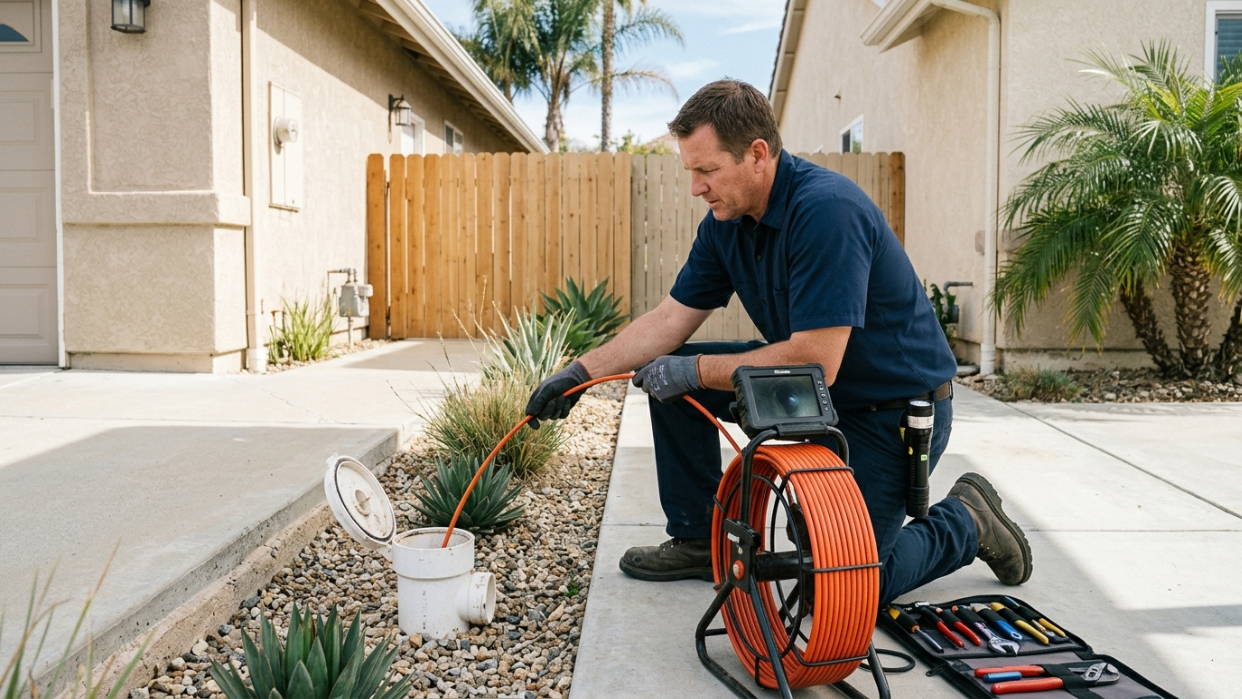 If you’re dealing with recurring clogs, slow drains, sewer odors, or you’re simply buying a home and want to know what’s happening underground, a sewer camera inspection in San Diego is the fastest way to get a clear answer. Best Plumbing and Drains of San Diego LLC uses video inspection equipment to look directly inside your sewer line, so instead of guessing at the problem, you get a real picture of what’s going on before any digging, repair, or repiping begins.
Older homes in neighborhoods like Normal Heights, North Park, and University Heights often have sewer lines that are decades old, and problems below the surface don’t always show obvious warning signs until a backup happens. A camera inspection takes the guesswork out of the equation, whether you’re troubleshooting a specific issue or being proactive about maintenance.
Why Sewer Camera Inspections Matter
Sewer lines run underground, out of sight, which means small problems can go unnoticed until they become expensive emergencies. A cracked pipe, an intruding tree root, or a section of pipe that’s started to sag doesn’t announce itself right away — it usually shows up first as a slow drain, then a recurring clog, and eventually a full backup into your home.
The risk with waiting is that sewer problems tend to get worse, not better, over time. A hairline crack can widen. A root intrusion can grow denser. Sediment buildup can compact into a near-total blockage. Video inspection lets a technician see exactly what stage a problem is at, so decisions about drain cleaning, hydrojetting, spot repair, or full sewer repair are based on evidence rather than assumption.
There’s also a financial upside to catching things early. Confirming the exact cause and location of a problem means the repair can be targeted, rather than guessing and potentially opening up more of the yard, driveway, or foundation than necessary.
Common Problems a Sewer Camera Inspection Solves
A camera inspection is useful any time there’s uncertainty about what’s happening inside a sewer line. Some of the most common scenarios homeowners and property managers bring to us include:
 Recurring clogs in the same drain — When a toilet, sink, or floor drain keeps backing up no matter how many times it’s been cleared, there’s usually a structural cause further down the line, like a belly in the pipe or a partial collapse.
- Slow drains throughout the house — If multiple fixtures are draining slowly at once, it often points to a blockage in the main sewer line rather than an isolated fixture issue.
- Tree root intrusion — Roots are drawn to the moisture inside sewer pipes and can work their way through joints and small cracks, gradually restricting or blocking flow.
- Sewer odors in the yard or home — A persistent sewer smell can indicate a break or leak in the line that’s letting gas escape before it reaches the vent stack.
- Old or unknown pipe materials — Homes with original clay, cast iron, or Orangeburg piping benefit from an inspection to assess current condition and remaining lifespan.
- Pre-purchase due diligence — Buyers and real estate agents often request an inspection before closing, since sewer line condition isn’t part of a standard home inspection.
- Post-repair verification — After a hydrojetting or repair job, a follow-up camera pass confirms the line is genuinely clear and not just temporarily improved.
If any of this sounds familiar, our guide on signs your sewer needs a camera inspection breaks down these warning signs in more detail.
Our Sewer Camera Inspection Process
We keep the process straightforward so homeowners know exactly what to expect and what they’re paying for:
- Initial conversation. We start by asking about the symptoms you’re experiencing — recurring clogs, odors, slow drains, or a specific concern like buying a home with an older sewer line.
- Access point setup. A technician locates an appropriate access point, typically an existing cleanout, to feed the camera in without unnecessary disruption to your property.
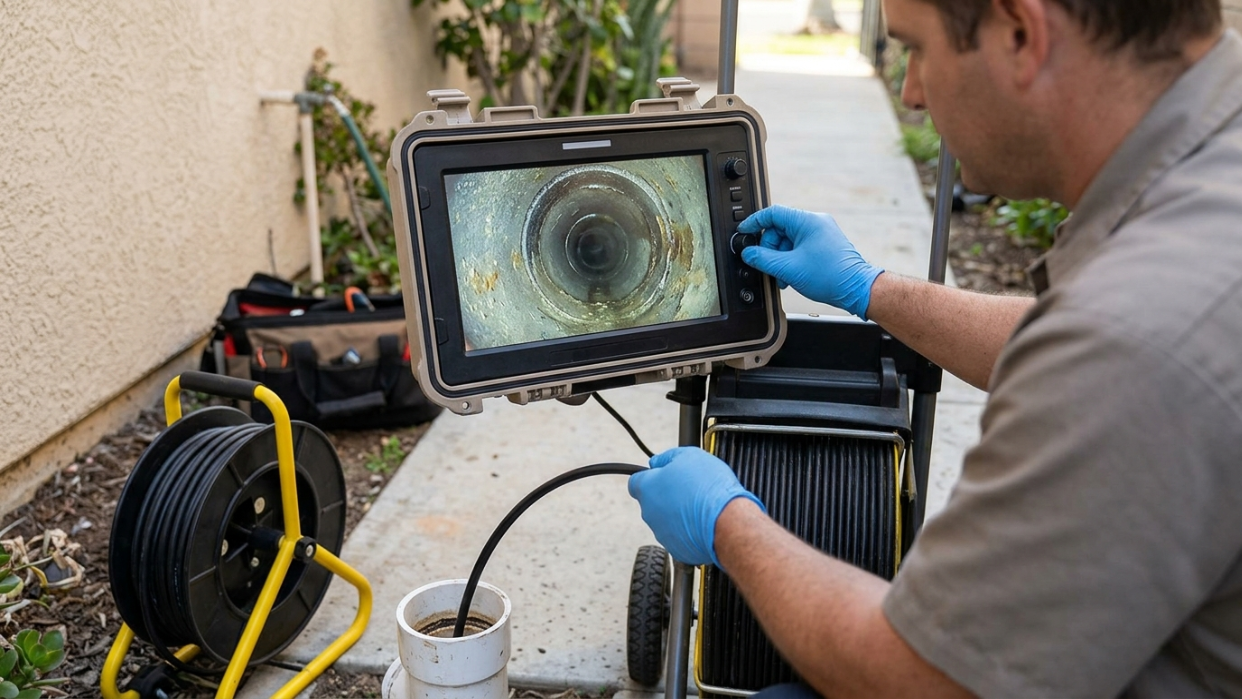
- Camera inspection. A waterproof video camera attached to a flexible cable is guided through the line, sending a live video feed back to the technician so the interior of the pipe can be viewed in real time.
- Locating and documenting findings. As the camera moves through the line, the technician notes the condition of the pipe, any blockages, root intrusion, cracks, offsets, or material transitions, along with their approximate location using onboard locating equipment.
- Explaining the results. Once the inspection is complete, we walk you through what was found in plain language — not jargon — and explain what it means for your plumbing system.
- Recommendations. Based on what the camera shows, we’ll recommend next steps, whether that’s routine drain cleaning, hydrojetting to clear buildup, or a repair plan if structural damage is present.
This same process is also useful for general plumbing troubleshooting beyond the sewer line — you can read more about the tools involved in our piece on tools plumbers use for sewer inspections in San Diego.
Why Choose Best Plumbing and Drains of San Diego
Best Plumbing and Drains of San Diego LLC works on the full range of residential plumbing systems found throughout the city, from general plumbing repairs to more involved sewer and drain work. A few things set our approach apart:
- Camera-first diagnosis. We don’t recommend digging, repiping, or major repair work without first confirming what’s actually happening inside the line. That protects your property and your budget.
- Clear communication. You’ll see and understand what the camera found — we explain results in plain terms, not technical shorthand.
- Experience with San Diego’s housing stock. From older Craftsman and bungalow-style homes in Normal Heights to newer construction further inland, we’re familiar with the range of pipe materials and layouts common across the region.
- Full-service capability. If the inspection reveals a problem, we’re equipped to handle the fix directly — whether that’s water and sewer/gas line work, a slab leak repair, or coordinating water damage restoration if a backup has already caused damage.
Sewer Camera Inspections Across San Diego
Sewer line conditions vary quite a bit depending on where you are in San Diego. Older neighborhoods closer to the urban core often have clay or cast iron sewer laterals that are well past their original design life, while homes further out may have newer PVC lines that are more resistant to root intrusion but can still suffer from improper installation, sagging, or offset joints caused by ground shifting.
Mature street trees are common throughout San Diego’s older residential neighborhoods, and their root systems are one of the most frequent causes of sewer line blockages we encounter. Properties on sloped lots also see their own set of issues, since grade changes can affect how well a line drains and where sediment tends to settle.
A camera inspection accounts for these local realities rather than applying a one-size-fits-all approach. Whether your property sits on a flat inland lot or a hillside closer to the coast, we assess the specific conditions of your line before recommending any next steps.
What Affects Cost, Timeline, and Results
Every sewer line is different, so the time and scope of an inspection depends on a few factors:
- Length and layout of the line — Longer runs or lines with multiple bends take more time to fully inspect.
- Access point availability — An existing cleanout makes access straightforward; if one isn’t available or accessible, that can affect scheduling and approach.
- Condition of the line — A line with heavy buildup or blockage may need to be cleared first before the camera can pass through cleanly, which can affect overall timeline.
- Purpose of the inspection — A general assessment differs from a targeted inspection meant to locate one specific issue, and the scope adjusts accordingly.
Because pricing depends on these site-specific factors, we don’t publish flat rates for sewer camera inspections. The most accurate way to get a cost estimate is to call and describe what you’re experiencing, or schedule an inspection directly.
Frequently Asked Questions
How much does a sewer camera inspection cost in San Diego?
How much does a sewer camera inspection cost in San Diego?
Cost depends on factors like the length of the line, access point availability, and whether the line needs to be cleared before the camera can pass through. Because every property is different, the most accurate way to get a cost estimate is to call and describe your situation or schedule an inspection.
How long does a sewer camera inspection take?
How long does a sewer camera inspection take?
Most inspections can be completed in a single visit, though the exact time depends on the length and condition of the line. Lines that are heavily blocked may need clearing first, which can extend the appointment.
Do I need a sewer camera inspection before buying a home?
Do I need a sewer camera inspection before buying a home?
Yes, it’s a smart step. Standard home inspections typically don’t include the sewer line, and problems like root intrusion or pipe deterioration aren’t visible from the surface. A camera inspection gives buyers a clear picture of the line’s condition before closing.
What are signs I need a sewer camera inspection?
What are signs I need a sewer camera inspection?
Recurring clogs in the same drain, slow drainage throughout the house, sewer odors in the yard, and gurgling sounds from drains are common signs. If you’re noticing any of these, an inspection can identify the exact cause rather than relying on guesswork.
Can a sewer camera inspection find tree root intrusion?
Can a sewer camera inspection find tree root intrusion?
Yes. Video inspection is one of the most reliable ways to confirm root intrusion, since it shows exactly where roots have entered the pipe and how much of the line is affected, which helps determine the right next step.
Is a sewer camera inspection necessary if my drains seem fine?
Is a sewer camera inspection necessary if my drains seem fine?
Not always, but it can be a worthwhile precaution for older homes with clay, cast iron, or Orangeburg piping, since these materials are more prone to age-related issues that don’t always show symptoms right away.
What happens after the inspection if a problem is found?
What happens after the inspection if a problem is found?
We’ll walk you through what the camera showed and recommend appropriate next steps, which could range from routine drain cleaning or hydrojetting to a more involved sewer repair, depending on what’s discovered.
Does Best Plumbing and Drains serve areas outside San Diego proper?
Does Best Plumbing and Drains serve areas outside San Diego proper?
We work throughout San Diego and surrounding areas. If you’re unsure whether your property falls within our service area, the best way to confirm is to give us a call.


