
Request Service Today!
Plumbing Services
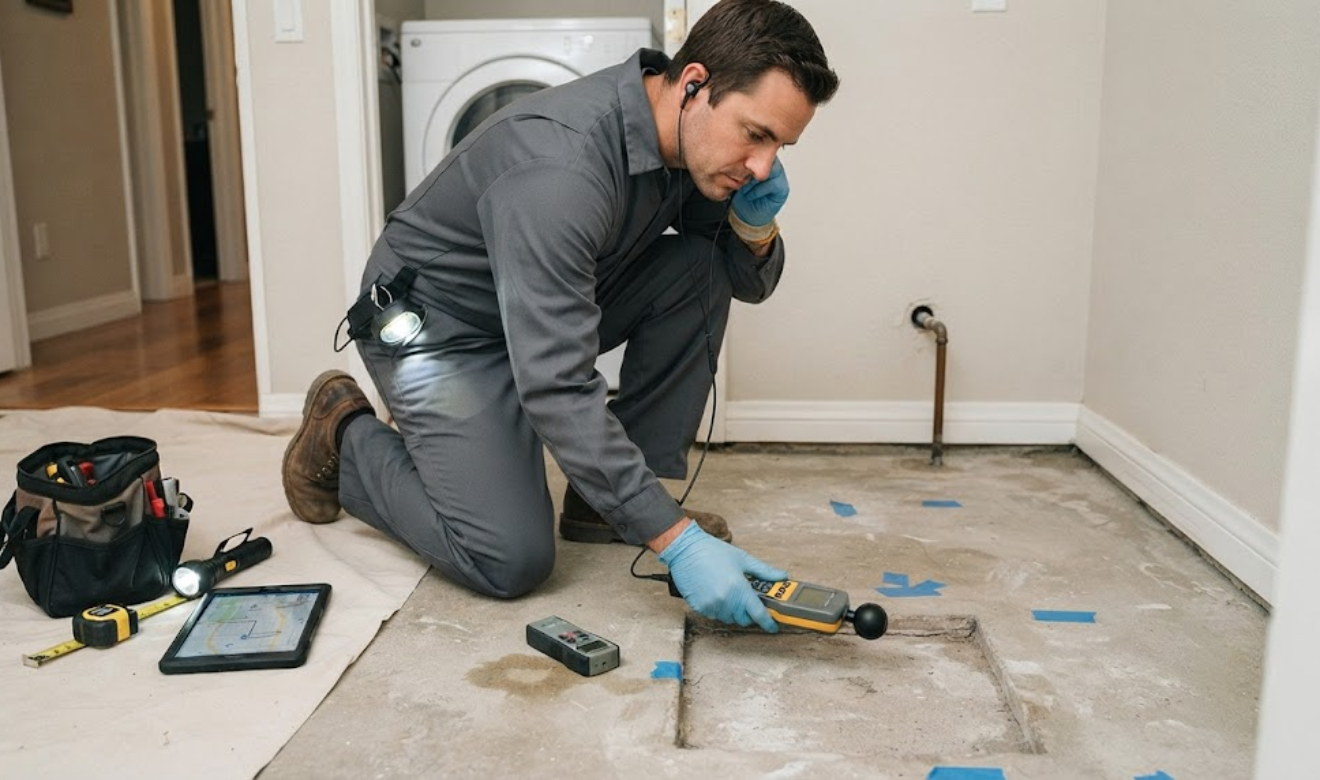 If you’ve noticed a warm spot on your floor, an unexplained spike in your water bill, or the sound of running water when every fixture is off, you may be dealing with a slab leak. This Slab Leak Repair Cost Guide is designed to help San Diego homeowners understand what a slab leak is, what causes it, how it’s repaired, and what factors influence the overall cost of fixing it.
Slab leaks are one of the more stressful plumbing problems a homeowner can face, mainly because the damage happens out of sight, underneath a concrete foundation. At Best Plumbing and Drains of San Diego LLC, we’ve spent years diagnosing and repairing slab leaks throughout San Diego neighborhoods, and this guide reflects the real-world questions homeowners ask us most often. Whether you’re trying to understand your options or you’re already facing a confirmed leak, this page will walk you through what to expect from start to finish.
Why This Service Matters
A slab leak isn’t just an inconvenience — it’s a problem that gets more expensive and more damaging the longer it’s left unaddressed. Water escaping from a pipe beneath your foundation can travel in unpredictable directions, which means the visible signs (a damp spot, cracked tile, or musty smell) may not even be near the actual source of the leak.
Left unresolved, a slab leak can lead to:
- Foundation damage. Prolonged water exposure can erode the soil beneath a slab, leading to shifting, cracking, or settling.
- Mold and mildew growth. Moisture trapped under flooring and inside walls creates ideal conditions for mold, which can affect indoor air quality.
- Higher water bills. A slab leak can run continuously, sometimes wasting hundreds of gallons before it’s caught.
- Structural and cosmetic damage. Flooring, drywall, baseboards, and even cabinetry can be damaged by rising moisture.
Because the risks compound over time, most plumbers — including our team — recommend addressing a suspected slab leak as soon as possible rather than waiting to see if it “gets worse.” Catching it early typically means a simpler repair and less collateral damage to your home.
Common Problems This Service Solves
Homeowners usually come to us after noticing one or more of the following warning signs:
- Unexplained increase in water bills with no obvious change in household water use
- The sound of running water beneath floors or walls, even when nothing is turned on
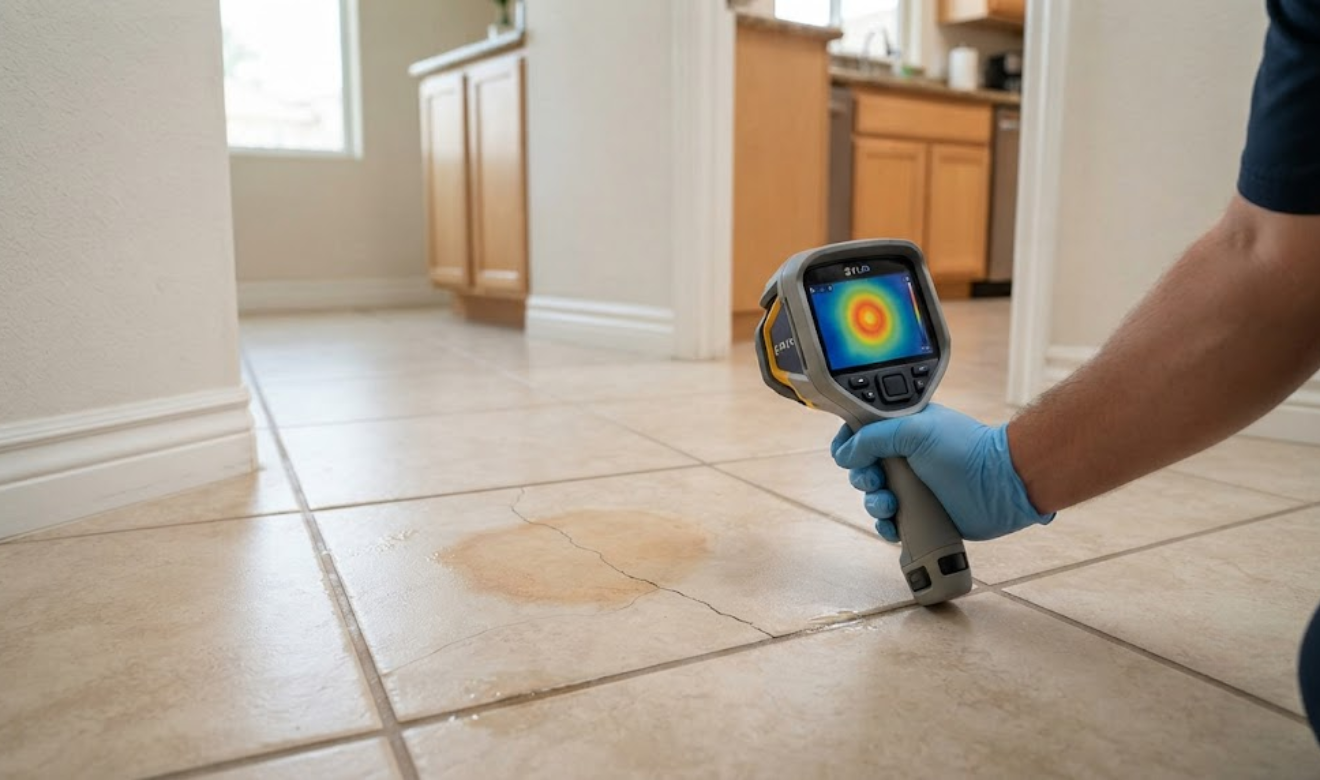 Warm spots on flooring, particularly common when the leak is on the hot water line
- Damp carpet, warped flooring, or cracked tile with no clear external cause
- Low water pressure at fixtures throughout the home
- Mold or musty odors in rooms with no obvious moisture source
- Visible cracks in the foundation or walls that seem to be worsening over time
If any of these symptoms sound familiar, it’s worth having a professional confirm whether you’re dealing with a true slab leak versus another issue, such as a leak related to your water pressure regulators or an issue elsewhere in your water, sewer, or gas lines. Not every hidden leak is a slab leak, which is why accurate diagnosis matters before any repair work begins. For a closer look at how professionals track down leaks behind walls and under floors, our guide on how to tell if pipes are leaking behind the walls breaks down the signs in more detail.
Our Service Process
We approach every slab leak methodically, since accurate diagnosis is the foundation of a cost-effective repair.
- Initial consultation and symptom review. We start by discussing what you’ve noticed — sounds, water bill changes, damp areas — to narrow down the likely leak location.
- Leak detection. Using specialized listening equipment and, when appropriate, sewer video inspection tools, we pinpoint the leak’s location without unnecessary guesswork or demolition.
- Diagnosis and options review. Once the leak is located, we explain what’s causing it and walk you through the realistic repair options for your specific situation.
- Repair. Depending on the leak’s location and severity, repair methods can include spot repair (accessing and fixing the specific damaged section of pipe), pipe rerouting (running a new line that bypasses the damaged section), or, in some cases, more extensive slab re-piping.
- Testing and confirmation. After the repair, we test the line to confirm the leak is fully resolved before considering the job complete.
- Cleanup and next steps. We leave the work area clean and, if flooring or drywall needs attention afterward, we’re happy to point you toward the next steps, including any water damage restoration service needs that may apply.
Throughout the process, we prioritize clear communication so you understand what’s happening beneath your home and why we’re recommending a particular repair approach.
Why Choose Best Plumbing and Drains of San Diego
Homeowners dealing with a slab leak want two things: an accurate diagnosis and a plumber they can trust not to recommend more work than necessary. That’s the foundation of how we operate.
- Local, San Diego-based experience. We understand the region’s soil conditions, common pipe materials in older homes, and the foundation types typical of local neighborhoods.
- Diagnosis-first approach. We don’t guess. We locate the leak before recommending a repair method, which helps avoid unnecessary excavation or expense.
- Transparent communication. We walk you through your options in plain language, including the trade-offs between spot repair, rerouting, and re-piping.
- Full-service plumbing expertise. Beyond slab leaks, our team handles everything from drain cleaning to general plumbing repairs, so we can address related issues in the same visit when needed.
- Experience with a range of property types, including work with property management companies overseeing multiple units.
Local Relevance: Slab Leaks in San Diego, CA
San Diego’s housing stock includes a wide mix of home ages and construction styles, and that mix plays a real role in slab leak frequency. Many homes built from the 1950s through the 1980s were plumbed with copper piping run directly beneath the concrete slab. Over decades, copper pipe in direct contact with soil, especially soil with certain mineral or pH characteristics, can be prone to pitting and corrosion, which is one of the more common causes of slab leaks in older San Diego homes.
Beyond pipe material and age, factors like soil movement, nearby tree root activity, and shifts related to San Diego’s occasional seismic activity can also stress the pipe joints beneath a slab over time. Homes in and around neighborhoods near San Diego, CA see a steady mix of these issues, which is why local experience with the area’s typical construction patterns matters when diagnosing a leak.
If you’re a property owner managing multiple units or an HOA-governed property, slab leaks can be especially disruptive since they may affect shared walls or common areas. Our page on plumbers who work with HOAs in San Diego covers how we coordinate repairs in multi-unit settings.
Cost, Timeline, and Expectations
Every slab leak is different, so it’s worth understanding the variables that influence cost and timeline rather than expecting a one-size-fits-all number.
What affects pricing:
- Leak location. A leak near an exterior wall or easily accessible section of pipe is generally less involved than one located beneath a central, load-bearing area of the home.
- Repair method. Spot repairs are typically less invasive than full rerouting or re-piping, which affects both cost and timeline.
- Flooring type. Repairs beneath tile, hardwood, or other finished flooring may require additional steps to remove and later restore the surface.
- Extent of water damage. If moisture has already affected flooring, drywall, or subflooring, remediation adds to the overall scope of work.
- Pipe material and accessibility. Older or corroded piping may need more extensive work than a single, isolated repair.
Timeline expectations:
Detection typically takes a few hours once a technician is on-site. The repair itself can range from a single day for a straightforward spot repair to multiple days for rerouting or re-piping work, particularly if flooring needs to be removed and replaced afterward.
Because pricing depends heavily on these site-specific factors, the most reliable way to get an accurate number is a professional inspection. We’re happy to walk you through the process and provide a clear estimate once we’ve confirmed the leak’s location and severity.
Frequently Asked Questions
How much does slab leak repair cost in San Diego?
How much does slab leak repair cost in San Diego?
Slab leak repair costs depend on the leak’s location, the repair method needed (spot repair, rerouting, or re-piping), and whether flooring or drywall restoration is required. Because every situation is different, the most accurate way to get pricing is a professional inspection and diagnosis, which we can provide as part of our slab leak service.
How do I know if I have a slab leak?
How do I know if I have a slab leak?
Common signs include unexplained increases in your water bill, the sound of running water when fixtures are off, warm spots on flooring, damp carpet or warped flooring, and reduced water pressure. If you notice any of these, it’s worth having a licensed plumber inspect your home to confirm the cause.
Can a slab leak be repaired without breaking the concrete?
Can a slab leak be repaired without breaking the concrete?
In some cases, yes. Pipe rerouting allows a plumber to reroute the water line above or around the slab instead of cutting into the concrete to access the damaged section. Whether this is possible depends on the leak’s location and your home’s layout, which is determined during the diagnosis stage.
Is a slab leak an emergency?
Is a slab leak an emergency?
A slab leak isn’t always an immediate emergency, but it should be treated with urgency. The longer it goes unaddressed, the more potential there is for foundation damage, mold growth, and higher water bills. If you suspect a slab leak, scheduling an inspection promptly is the safest approach.
What causes slab leaks in San Diego homes?
What causes slab leaks in San Diego homes?
Common causes include corrosion in older copper piping, soil movement, pipe abrasion against the slab over time, and stress on pipe joints from seismic activity or shifting ground. Homes built several decades ago with copper piping beneath the slab are more commonly affected.
Does homeowners insurance cover slab leak repair?
Does homeowners insurance cover slab leak repair?
Coverage varies by policy and provider, so it’s best to check directly with your insurance company. Some policies cover the cost of accessing and repairing the leak but not the underlying pipe replacement, while others differ. We recommend documenting the damage and contacting your insurer as part of your next steps.
How long does slab leak repair take?
How long does slab leak repair take?
Detection typically takes a few hours. Repair timelines range from about a day for a straightforward spot repair to several days for more involved rerouting or re-piping work, especially if flooring needs to be removed and restored afterward.
Do you serve areas near San Diego, CA?
Do you serve areas near San Diego, CA?
Yes, we provide slab leak detection and repair services throughout San Diego and the surrounding areas. Contact us to confirm service availability for your specific location.


