
Request Service Today!
Plumbing Services
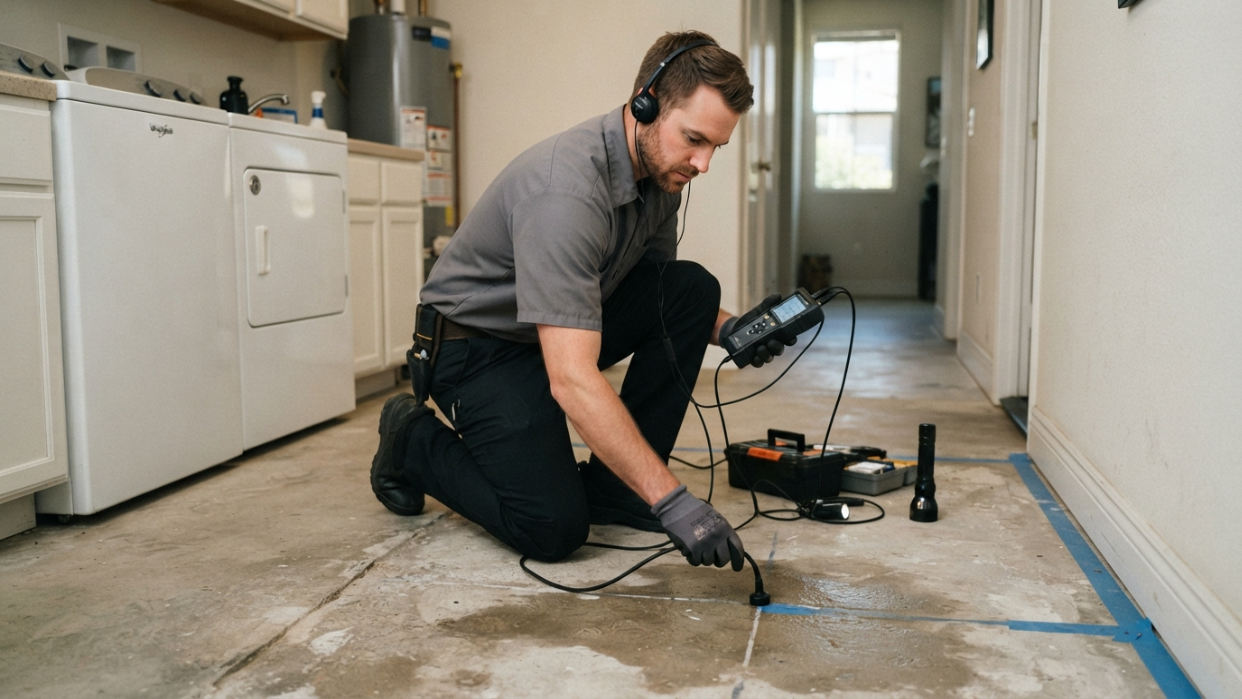 If you’ve noticed a mysteriously high water bill, warm patches on your floor, or the sound of running water when every faucet in the house is off, you may be dealing with a slab leak. Slab Leak Detection and Repair San Diego is one of the most urgent plumbing services a homeowner can need, because a leak hidden beneath your concrete foundation doesn’t stay small — it spreads, causes structural damage, and can lead to mold growth if it’s left unaddressed.
At Best Plumbing and Drains of San Diego LLC, we specialize in locating and repairing slab leaks quickly and accurately, using methods designed to minimize disruption to your home. Whether you live in a mid-century Normal Heights bungalow or a newer build near Mission Valley, our team understands how San Diego’s soil, foundation types, and older copper piping systems contribute to slab leaks — and how to fix them the right way.
Why Slab Leak Detection and Repair Matters
A slab leak occurs when a water or sewer line running underneath your home’s concrete foundation begins to crack, corrode, or rupture. Because these pipes are buried, the leak is invisible at first — but the consequences are not.
Left untreated, a slab leak can:
- Undermine your foundation over time as water erodes the soil beneath it
- Create ideal conditions for mold and mildew growth inside walls and flooring
- Cause your water bill to spike dramatically, sometimes by hundreds of dollars a month
- Damage flooring materials like hardwood, tile, and carpet from the ground up
- Lead to more expensive structural repairs the longer the leak continues
The urgency here is real. Water finds the path of least resistance, and once it starts moving through soil beneath a slab, it can shift and settle the foundation unevenly. Acting quickly when you suspect a slab leak isn’t just about saving money on your water bill — it’s about protecting the structural integrity of your home.
Common Problems This Service Solves
Homeowners searching for slab leak help are often trying to make sense of symptoms they don’t fully understand yet. Here are the most common issues our slab leak detection and repair service addresses:
Unexplained spikes in water bills. If your usage habits haven’t changed but your bill has jumped significantly, a hidden leak under your slab is one of the most likely culprits.
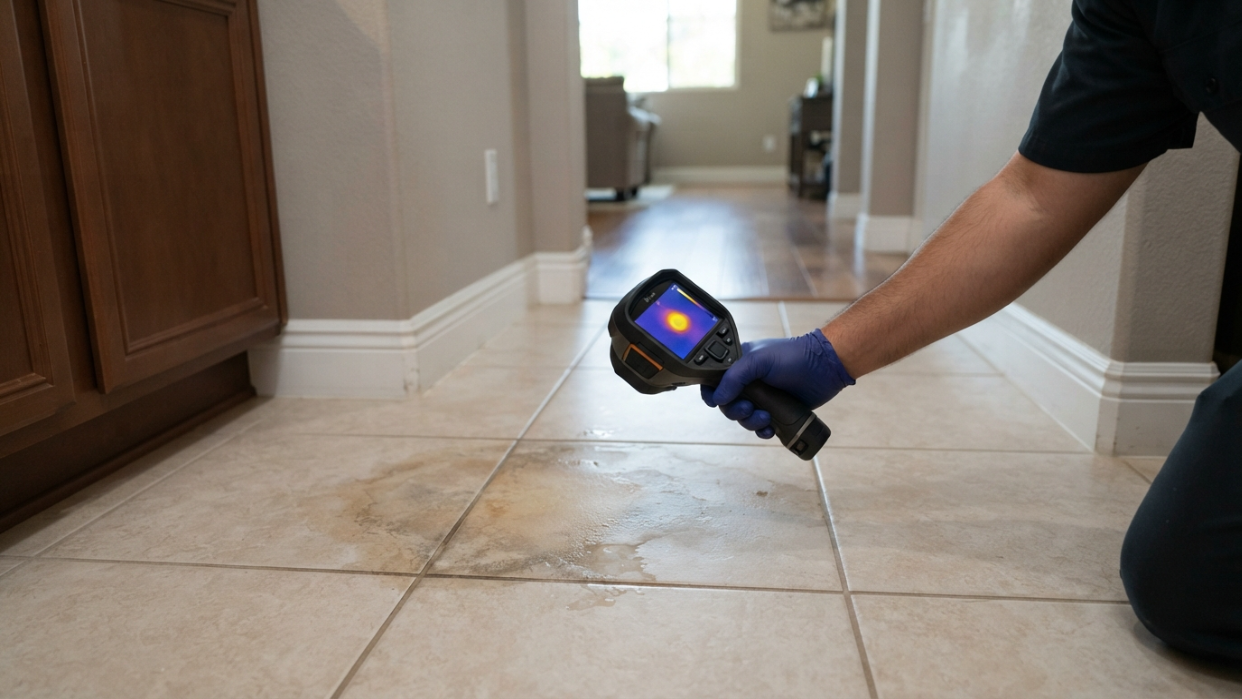
Warm or damp spots on the floor. A hot spot on tile or carpet, especially without an obvious source like a heating vent, often points to a hot water line leaking beneath the slab.
 The sound of running water with everything off. This is one of the clearest signs of a slab leak. If you can hear water movement but no fixtures are in use, the sound is likely coming from a pressurized line beneath your foundation.
Low water pressure throughout the home. When water is escaping underground before it reaches your fixtures, pressure at the tap can drop noticeably.
Cracks in flooring or walls. As water saturates the soil under a slab, the foundation can shift slightly, leading to visible cracking in tile, drywall, or baseboards.
Mold or musty odors with no visible source. Moisture trapped beneath flooring can create mold colonies long before any visible water damage appears above the surface. In cases where moisture has already spread, our team also coordinates with our water damage restoration service to address any secondary damage.
Our Service Process
We approach every slab leak call with a process built around accuracy first, so we’re not guessing where to open up a slab.
1. Initial Assessment and Symptom Review We start by asking about what you’ve noticed — sounds, water bill changes, warm spots, or visible damage. This context helps our technicians narrow down likely leak zones before equipment is even used.
2. Electronic Leak Detection Using acoustic listening devices and thermal imaging equipment, our technicians pinpoint the leak’s approximate location without needing to break up your entire floor. This non-invasive approach is faster and less disruptive than older trial-and-error methods.
3. Line Verification with Camera Inspection For added accuracy, we may perform a sewer video inspection or line camera check to confirm the exact location and condition of the affected pipe before recommending a repair path.
4. Repair Options Review Depending on the leak’s location and severity, we walk you through your options — spot repair, pipe rerouting above the slab, or full repiping if the line has multiple points of failure. We explain the tradeoffs of each so you can make an informed decision.
5. Repair and Restoration Once you approve a plan, our licensed plumbers complete the repair using industry-standard materials and techniques. We aim to minimize the footprint of any excavation and restore the area as close to its original condition as possible.
6. Final Testing and Confirmation After the repair, we pressure test the line to confirm the leak is fully resolved before we consider the job complete.
Why Choose Best Plumbing and Drains of San Diego
Slab leaks require precision, experience, and the right diagnostic equipment — not guesswork. Here’s what sets our team apart:
- Local expertise. We’ve worked on homes throughout San Diego’s varied neighborhoods, from older properties with original copper piping to newer construction, and we understand how local soil and foundation conditions affect slab leaks.
- Non-invasive detection first. We prioritize electronic and acoustic detection methods to avoid unnecessary damage to your flooring and foundation.
- Transparent communication. Before any repair begins, we explain what we found, what your options are, and what to expect — no surprises.
- Full-service plumbing support. Beyond slab leaks, we also handle related issues like water, sewer, and gas line repair, drain cleaning, and general plumbing services, so if your slab leak has caused secondary issues, we can address them in the same visit.
- Serving the greater San Diego area. Our team responds to slab leak calls throughout San Diego and the surrounding communities.
Slab Leaks in San Diego: Local Relevance
San Diego’s housing stock spans decades of construction styles, and that matters when it comes to slab leaks. Many homes built from the 1950s through the 1980s — common throughout neighborhoods like Normal Heights, Kensington, and North Park — were built with copper piping running beneath the slab. Over 40 to 70 years, copper can develop pinhole leaks due to corrosion, soil chemistry, and water quality, making these older homes especially prone to slab leaks today.
Newer construction isn’t immune either. Shifting soil, seismic activity, and settling foundations can all put stress on pipes beneath a slab regardless of when the home was built. Homes near canyons or on sloped lots, which are common throughout San Diego’s hillside communities, can also experience more soil movement that stresses buried plumbing lines over time.
If you own or manage multiple properties, this is worth planning for proactively. Our team frequently supports property management companies and HOAs — including groups covered in our overview of plumbers who work with HOAs in San Diego — with slab leak detection across multiple units, since catching a leak early in one unit can prevent it from affecting shared walls or adjacent properties.
For homeowners wondering how to tell if a leak might be developing before it becomes a full slab leak, our guide on how to tell if pipes are leaking behind the walls covers related warning signs worth watching for, and our piece on ways to locate a leaking pipe in the floor goes deeper into detection methods.
Cost, Timeline, and What to Expect
Every slab leak is different, and pricing depends on several factors:
- Leak location. A leak near the perimeter of the slab is typically easier and faster to access than one located near the center of the home.
- Pipe material and condition. Older copper lines may need broader repair or replacement, while a single pinhole leak in an otherwise sound line may only need a spot repair.
- Repair method chosen. Spot repairs are generally the fastest and most affordable option, while rerouting a line above the slab or full repiping takes more time and materials but can offer a longer-term solution, especially in homes with aging pipe systems throughout. If a whole-home approach ends up being the right call, our resource on what to budget for a whole-house repipe can help you plan ahead.
- Extent of secondary damage. If water has already affected flooring, drywall, or created mold conditions, restoration work will factor into the overall project timeline and scope.
We provide a clear assessment and walk you through pricing before any work begins, so you know what to expect. Detection typically takes a few hours, while repair timelines vary depending on the method selected and the extent of the damage found. If you’re facing an active leak and need help right away, our overview of emergency water leak repair services in San Diego can help you understand what fast response looks like.
If the underlying pipe has reached the end of its usable life, slab re-piping may be the more cost-effective long-term choice rather than repeated spot repairs — something our team can evaluate honestly during your assessment, similar to the approach outlined in our slab re-piping resource.
Ready to Stop a Slab Leak Before It Gets Worse?
A slab leak won’t fix itself, and every day it continues can mean more water waste, higher bills, and greater risk to your home’s foundation. The team at Best Plumbing and Drains of San Diego LLC is ready to locate the problem accurately and walk you through the right repair option for your home.
Call (619) 678-2444 today to schedule your slab leak detection and repair in San Diego, or request a consultation to get a clear, honest assessment of what’s going on beneath your floors. Don’t wait for a small leak to become a major repair — reach out now.
Frequently Asked Questions
1. How do I know if I have a slab leak?
1. How do I know if I have a slab leak?
Common signs include unexplained increases in your water bill, the sound of running water when nothing is turned on, warm spots on your flooring, low water pressure, or visible cracks in tile or walls. If you notice any combination of these, it’s worth having a professional perform electronic leak detection to confirm.
2. Is slab leak repair covered by homeowners insurance?
2. Is slab leak repair covered by homeowners insurance?
Coverage varies by policy and provider, so it’s best to check directly with your insurance company. Some policies cover the cost of accessing and repairing the leak but not the underlying pipe failure itself. We recommend documenting the damage and contacting your insurer early in the process.
3. Can a slab leak be fixed without breaking the entire floor?
3. Can a slab leak be fixed without breaking the entire floor?
In many cases, yes. Electronic leak detection allows technicians to pinpoint the leak’s location precisely, often limiting excavation to a small, targeted area rather than tearing up an entire room. The best approach depends on the leak’s location and the pipe’s condition.
4. How much does slab leak detection and repair cost in San Diego?
4. How much does slab leak detection and repair cost in San Diego?
Cost depends on the leak’s location, the extent of the damage, and the repair method chosen, such as a spot repair versus rerouting or repiping. We provide a clear assessment and pricing explanation before any work begins so there are no surprises.
5. What causes slab leaks in San Diego homes?
5. What causes slab leaks in San Diego homes?
Slab leaks are commonly caused by aging or corroded copper piping, soil movement, seismic activity, or abrasion where pipes rub against concrete or gravel over time. Older San Diego homes with original copper plumbing are especially susceptible after several decades of use.
6. How long does slab leak repair take?
6. How long does slab leak repair take?
Detection usually takes a few hours. Repair timelines vary based on the method used — a straightforward spot repair may be completed in a day, while rerouting or repiping can take longer depending on the scope of work involved.
7. What happens if a slab leak is left untreated?
7. What happens if a slab leak is left untreated?
An untreated slab leak can lead to foundation erosion, mold growth, damaged flooring, and steadily rising water bills. The longer it continues, the more extensive and costly the resulting damage tends to become.
8. Do you offer emergency slab leak services in San Diego?
8. Do you offer emergency slab leak services in San Diego?
Yes, we understand slab leaks can escalate quickly, and we prioritize fast response for active or worsening leaks throughout the San Diego area.


